CinnabyteHQ
A centralized workspace for managing internal operations.
CinnabyteHQ is an internal operations platform that centralizes requests, approvals, and ongoing work into one structured workspace. It is a full-stack web app with its own REST API and a PostgreSQL database.
Status: Runs locally against a Supabase-hosted PostgreSQL database with seeded demo data. Authentication is the next milestone.
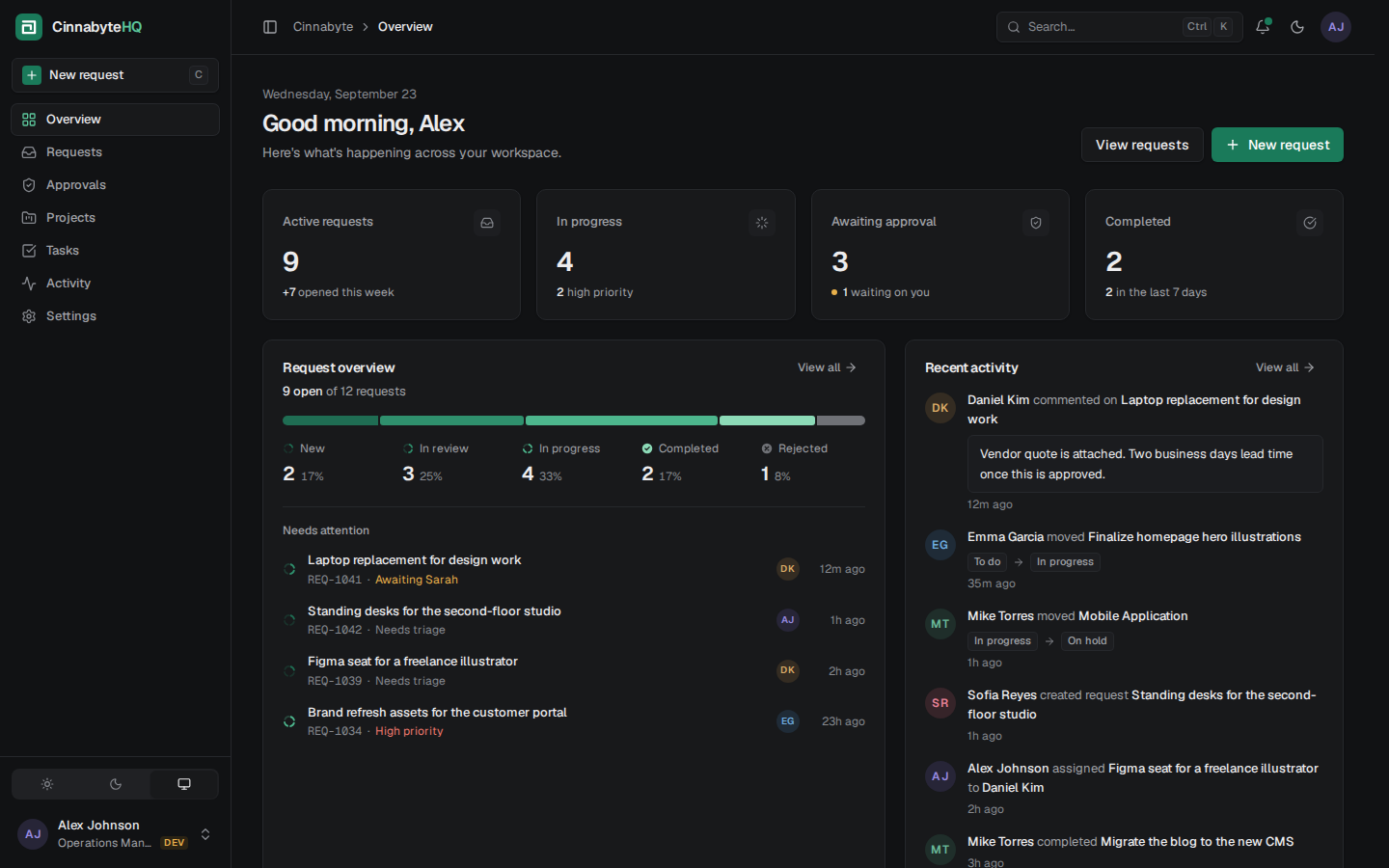
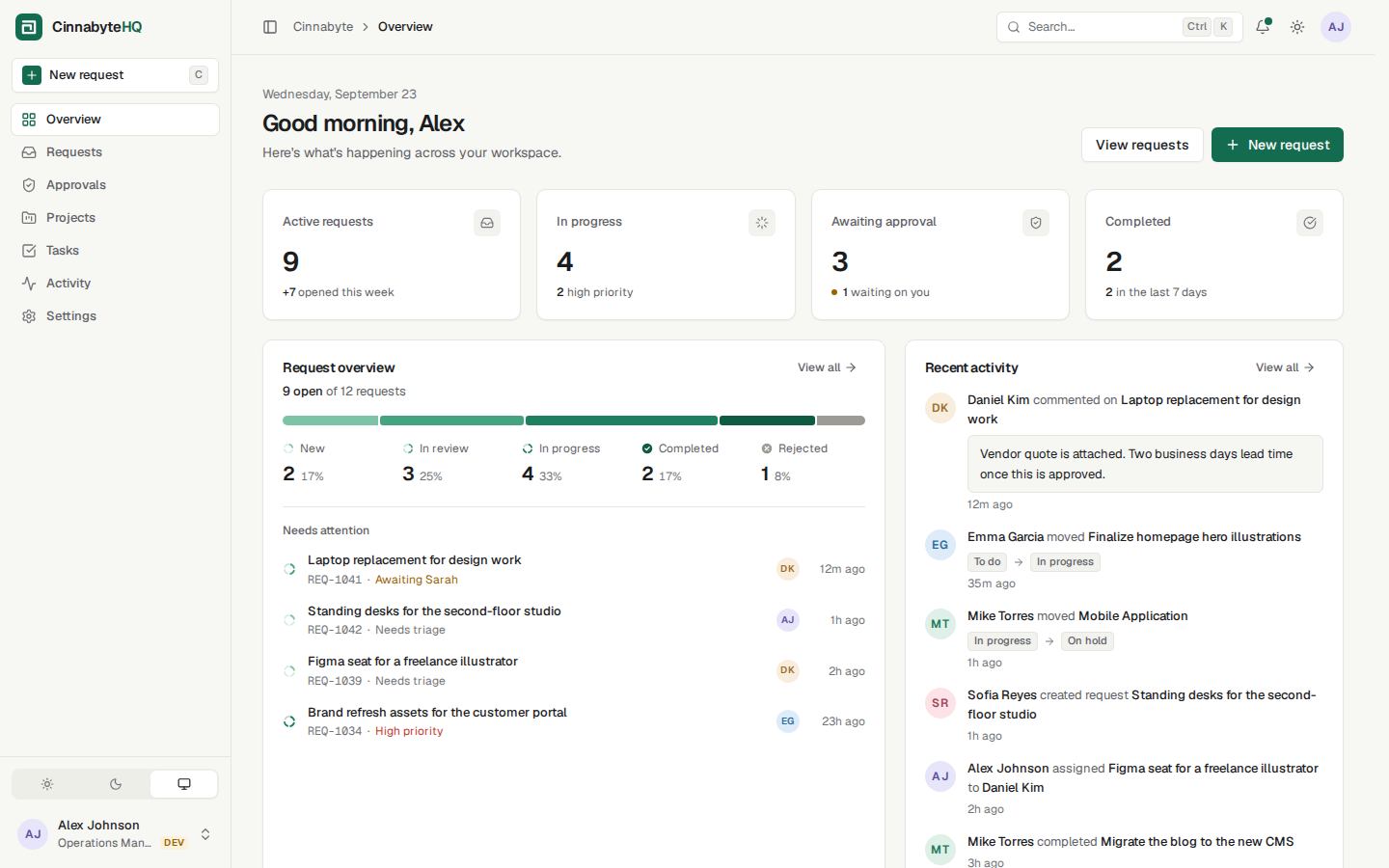
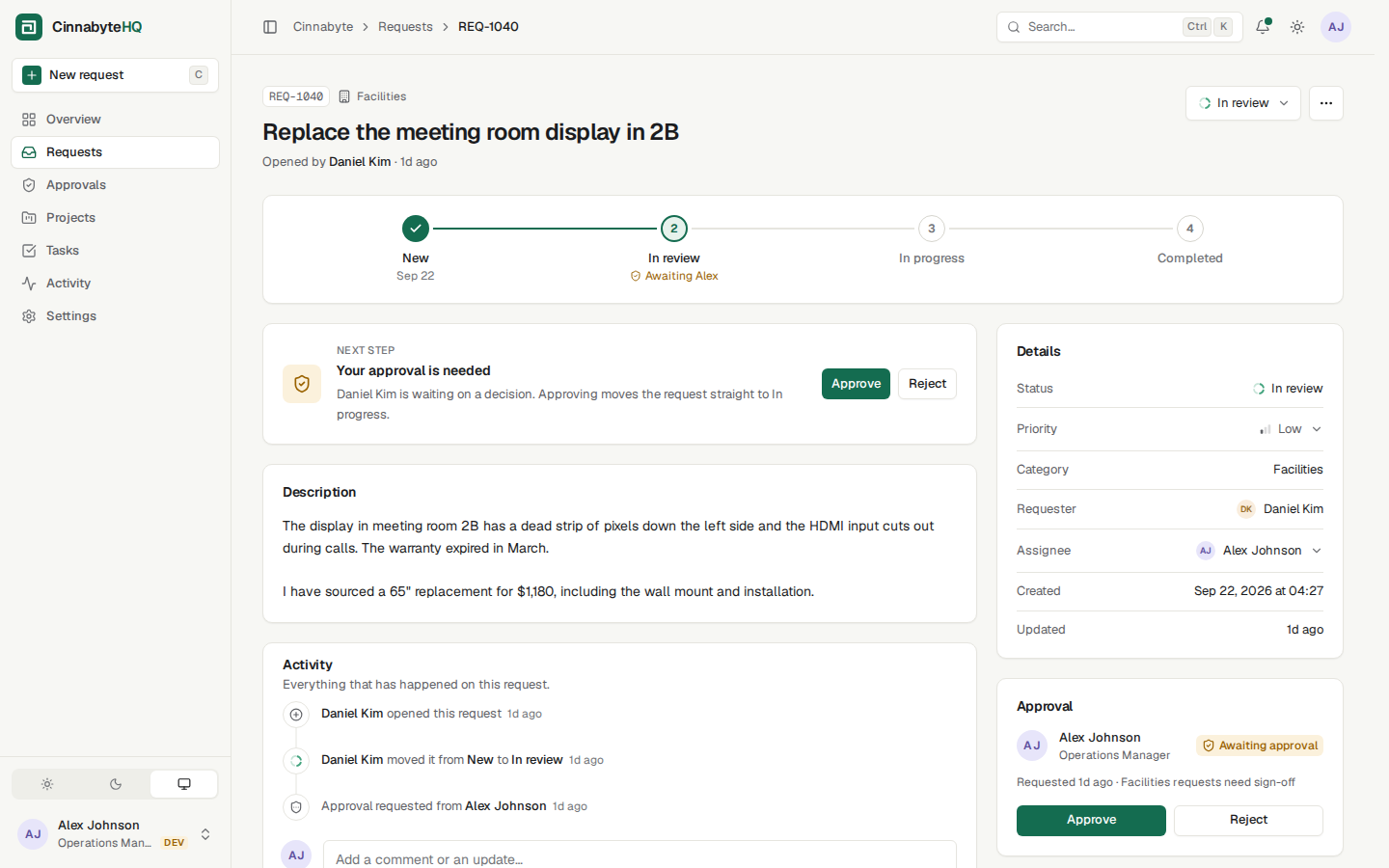
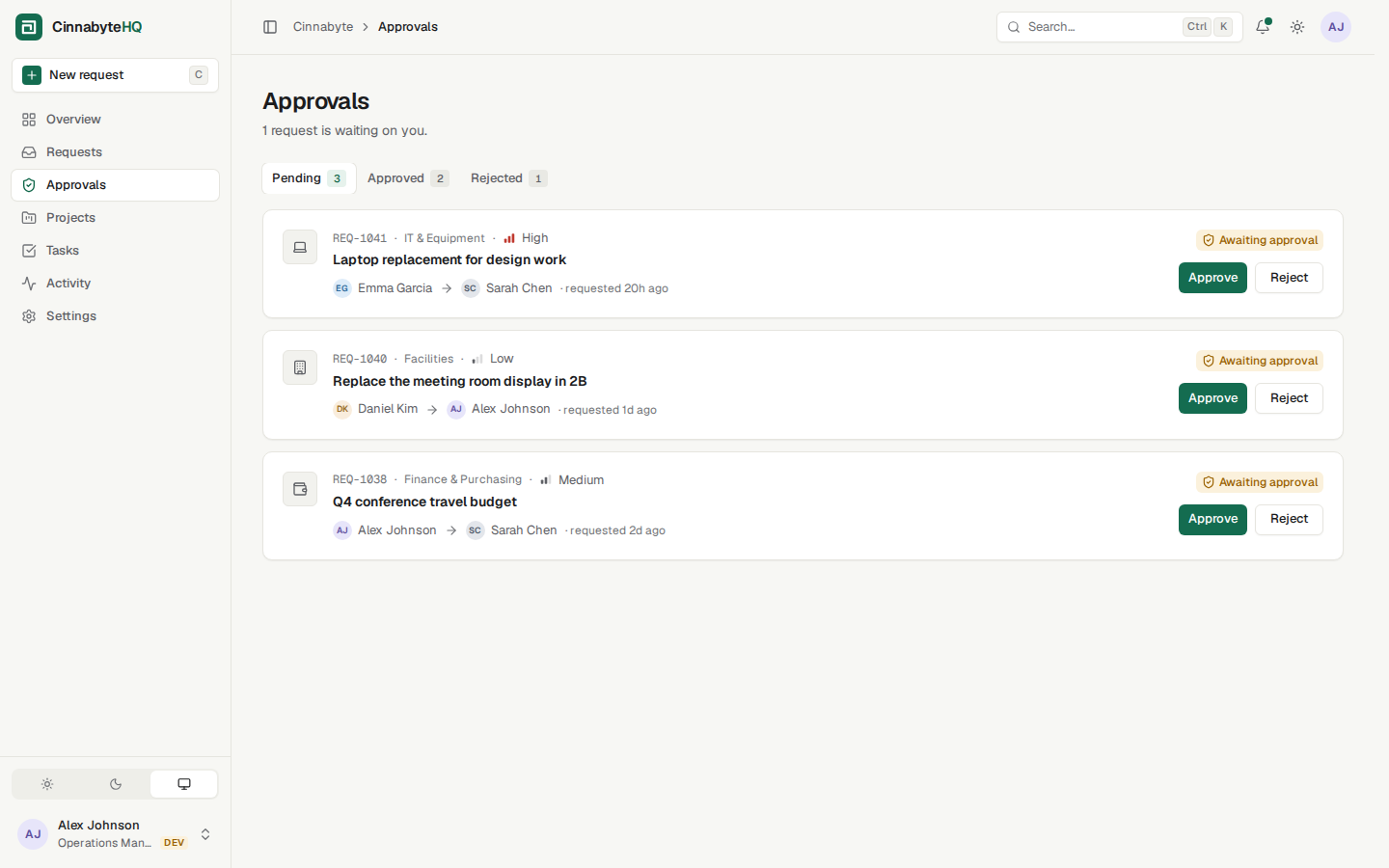
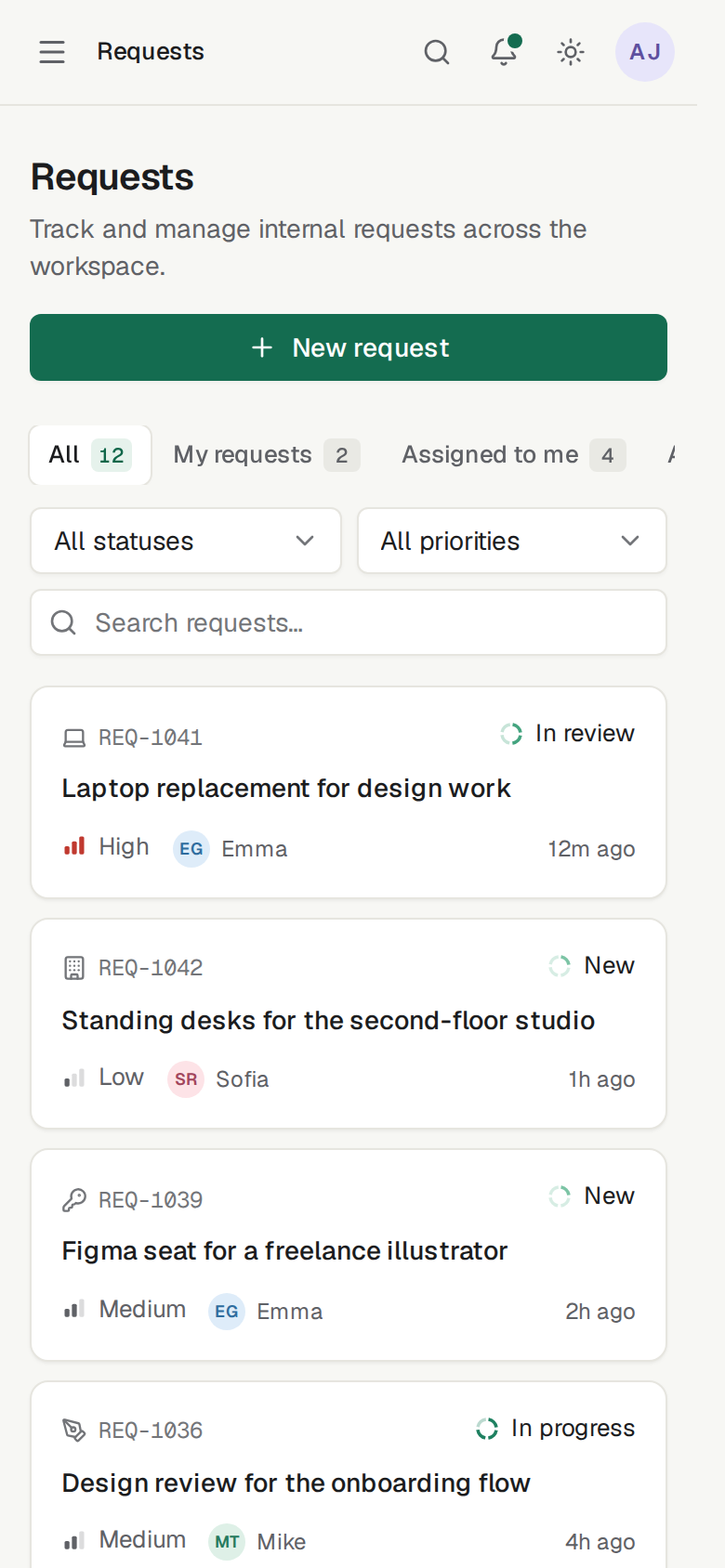
01 / 04Overview dashboard
Problem & solution
- Problem
- Small teams often track internal requests, sign-offs, project work and tasks across scattered tools, which makes it hard to see what is waiting on whom and what changed.
- Solution
- One workspace where every request follows an explicit workflow. Categories that need sign-off are routed to an approver automatically, and every change is written to an activity log. The server-rendered UI and the REST API share the same workflow rules, so the interface never offers a step the API would refuse.
Technologies
7 technologiesAll implemented
- AstroServer-rendered pages and API routesImplemented
- TypeScriptStrict mode across UI, API and servicesImplemented
- PostgreSQLHosted on SupabaseImplemented
- REST APIAstro API routes with a JSON envelopeImplemented
- Node.jsServer runtime via the Node adapterImplemented
- ZodStrict request validationImplemented
- Tailwind CSSImplemented
Architecture
Request lifecycle
Astro UI
Pages · server islands · TS scripts
REST API
API routes · Zod validation
Service layer
Workflow · approvals · activity log
PostgreSQL
Supabase · migration + seed
Engineering notes
One workflow, enforced twice
A single workflow module defines the allowed status changes. The API rejects invalid transitions with 409 Conflict, and the UI uses the same rules to disable them.
Approvals that can’t race
Decisions only apply while an approval is still pending, and a partial unique index guarantees one pending approval per request.
Integrity in the schema
Enums, length and range checks, deliberate foreign-key delete rules and updated_at triggers are defined in the PostgreSQL migration.
A strict API contract
Every endpoint validates input with strict schemas and returns a consistent data/error envelope with mapped HTTP status codes.
Key technical concepts
- Workflow state machine
- Category-based approval routing
- Layered service architecture
- Schema-level integrity
- Input validation
- Server islands
- Activity / audit logging
Scope
Built06 items
- Requests: create, filter, search, comment and move through review
- Approvals routed by category, with approve / reject decisions
- Projects and tasks with progress and optimistic task updates
- Activity log and an overview dashboard computed from the database
- Command palette search and keyboard shortcuts
- Light and dark themes with a responsive layout
Planned04 items
- Authentication and row-level security policies
- Real-time updates
- Automated tests and CI
- Public deployment